
The concept of pre-stressing is one which every structural engineer wishes they had discovered.
Category - How Bridges Work
Bridge engineering explained without the textbook.

A bridge designed for some level of earthquake is better than a bridge not designed for one at all.

While expansion joints may seem like a small aspect of a larger bridge project, it is one of the more important aspects.
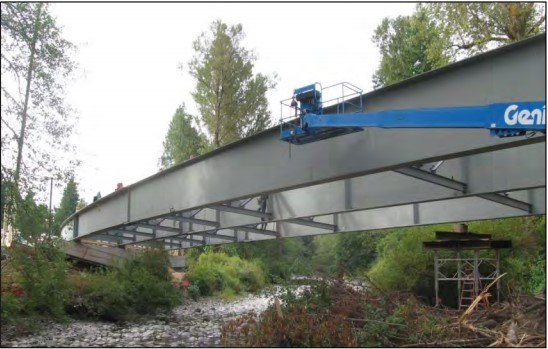
There may be no cure for fatigue in steel, but we have learned to cope with the symptoms.

Consigned to secondary routes, many timber bridges are among the older of our bridge assets. How can we preserve and prolong the life of these bridges?

There is more to most design problems than just answering the question: is it strong enough?

Nothing in this world strikes more fear in the hearts of both engineers and the traveling public like open grid decking on bridges.

Maintenance can be summed up in one basic statement – an activity or action intended to retain or restore something in a state where it can perform its required function.

Developed as a way to build bridges in remote areas of Africa, the InQuik system is an innovative semi-modular method to construct bridges up to 18 meters long.

The Rockingham Bridges currently under construction in Vermont are just one example of the versatile precast post-tensioned splice girder concept.